
You have blood work done, open your results, and see a number labeled “A1C.” But what does that number actually tell you?
This common blood test helps healthcare providers screen for and monitor prediabetes and diabetes. Unlike a single glucose reading, which shows your blood sugar at one moment in time, the test gives an estimate of your average blood glucose over roughly the previous two to three months.
As a result, it can reveal longer-term blood sugar patterns that may not appear in one isolated reading.
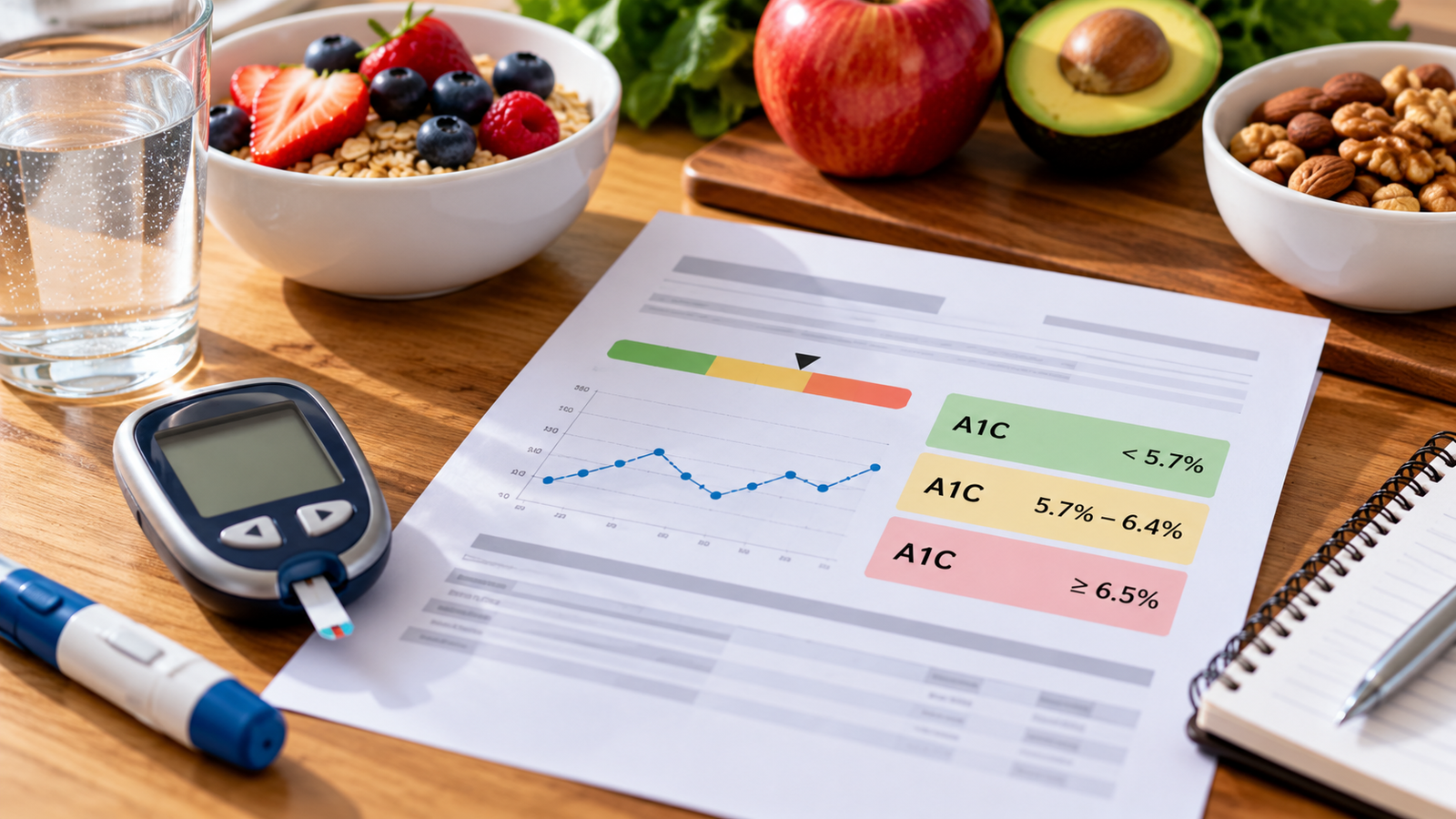
Quick answer: An A1C below 5.7% is generally considered normal. A result from 5.7% to 6.4% falls within the prediabetes range. A result of 6.5% or higher may indicate diabetes and usually requires appropriate confirmation unless you have clear symptoms and unequivocally high blood sugar.
What Is an A1C Test?
A1C, also called hemoglobin A1C, HbA1c, or glycated hemoglobin, measures the percentage of hemoglobin in your blood that has glucose attached to it.
Hemoglobin is the protein inside red blood cells that carries oxygen throughout your body.
As glucose circulates in your bloodstream, some of it naturally attaches to hemoglobin. Therefore, when average blood glucose rises, the percentage of glycated hemoglobin usually rises too.
Because red blood cells typically circulate for several months, this measurement provides a longer-term picture of blood sugar than a finger-stick glucose reading.
The National Institute of Diabetes and Digestive and Kidney Diseases explains that the test reflects average blood glucose over approximately the previous three months.
What Do the Numbers Mean?
For nonpregnant adults, healthcare professionals commonly use the following diagnostic ranges:
- Normal: below 5.7%
- Prediabetes: 5.7% to 6.4%
- Diabetes: 6.5% or higher
However, these numbers should always be interpreted in the context of your overall health.
One abnormal result does not automatically confirm a diagnosis. In many situations, your healthcare provider will repeat the test or use another blood glucose test unless symptoms and glucose levels clearly establish diabetes.
What Does a Result of 5.7% Mean?
A result of 5.7% is the lower threshold of the prediabetes range.
This means your average blood sugar has been higher than what is considered normal, but it has not reached the diabetes threshold.
Prediabetes matters because it increases the risk of developing type 2 diabetes. In addition, it is associated with increased cardiovascular risk.
Therefore, if your result falls in this range, your provider may discuss lifestyle changes, repeat testing, and other factors such as blood pressure, cholesterol, weight, and family history.
Read our guide on prediabetes symptoms and risk factors for more information.
What Does a Result of 6.5% Mean?
A measurement of 6.5% or higher falls within the diabetes diagnostic range.
Even so, healthcare providers generally confirm the finding when a person does not have clear symptoms of high blood sugar.
Confirmation may involve repeating the same test or using another appropriate glucose test.
This approach helps reduce the chance of making a diagnosis from one isolated laboratory result.
How Is This Different From a Fasting Blood Sugar Test?
A fasting blood glucose test measures your blood sugar at one point in time after you have not eaten for at least eight hours.
By contrast, this longer-term measurement reflects your average blood sugar over several weeks.
Therefore, the two tests provide different but complementary information.
For example, someone may have a normal fasting glucose on one morning but still have an elevated longer-term result if blood sugar has frequently been high at other times.
Do You Need to Fast for the Test?
No. Fasting is generally not required.
You can usually eat and drink normally before the test unless your healthcare provider has ordered other blood work that requires fasting.
Always follow the specific instructions given by your clinic or laboratory.
What Is Estimated Average Glucose?
Some laboratory reports show an estimated average glucose, often abbreviated as eAG, alongside your percentage result.
This converts the percentage into an approximate average blood glucose value expressed in mg/dL.
For example, a result of around 6% corresponds to an estimated average glucose of roughly 126 mg/dL.
However, eAG remains an estimate. It does not show individual blood sugar highs and lows throughout the day.
Can the Test Show Blood Sugar Spikes?
Not very well.
The measurement reflects an average rather than every rise and fall in blood sugar.
As a result, two people can have the same result even when their daily glucose patterns are very different.
For example, one person may have relatively stable blood sugar throughout the day, while another experiences larger highs and lows that produce a similar average.
For this reason, your healthcare provider may use other glucose measurements when more detailed information is needed.
Can the Result Be Inaccurate?
Yes. Certain health conditions and medical situations can make the result less reliable.
Factors that may affect accuracy include:
- Severe anemia
- Recent blood loss
- Recent blood transfusion
- Kidney failure
- Liver disease
- Pregnancy
- Some hemoglobin disorders or variants
- Conditions that change the lifespan of red blood cells
The NIDDK notes that some hemoglobin variants can cause falsely high or low results depending on the laboratory method used.
Therefore, if your laboratory result does not match your home glucose readings or symptoms, tell your healthcare provider.
Your provider may recommend another method of assessing blood sugar.
Why Can Hemoglobin Variants Affect the Result?
This blood test relies on hemoglobin inside red blood cells.
Some people inherit hemoglobin variants that interfere with certain laboratory methods.
These variants occur more frequently among people with ancestry from parts of Africa, the Mediterranean, South Asia, and Southeast Asia.
However, having a hemoglobin variant does not automatically mean the test cannot be used.
Instead, your provider may confirm that the laboratory method is appropriate or choose another glucose test if the result appears inconsistent.
Can the Test Be Used During Pregnancy?
Healthcare providers generally use other glucose tests to diagnose gestational diabetes.
Pregnancy changes red blood cell turnover and glucose metabolism. Consequently, this measurement may be less suitable for certain diagnostic purposes during pregnancy.
Providers typically screen pregnant patients for gestational diabetes using specific glucose-testing protocols.
How Often Should You Have the Test?
The right testing schedule depends on your results and overall health.
If your blood sugar is normal and you do not have major risk factors, you may only need testing periodically.
People with prediabetes usually need more regular monitoring.
Meanwhile, people with diabetes may have the test checked at least twice a year and sometimes more frequently when treatment changes or blood sugar is not at goal.
Your provider will recommend a testing schedule based on your individual needs.
What Can Raise Your Result?
Blood sugar patterns can change for many reasons.
Possible contributors include:
- Insulin resistance
- Prediabetes
- Type 2 diabetes
- Changes in weight
- Reduced physical activity
- Dietary patterns
- Certain medications
- Chronic stress
- Poor sleep
- Other medical conditions
Because several factors can influence blood sugar, a rising result should not automatically be blamed on one food or habit.
Instead, your healthcare provider can help you look at the broader pattern.
Can Lifestyle Changes Improve Your Result?
Yes. For many people with prediabetes or type 2 diabetes, lifestyle changes can improve blood sugar control.
However, the most effective approach depends on your health, medications, goals, and other risk factors.
1. Increase Physical Activity
Regular movement helps your muscles use glucose and can improve insulin sensitivity.
Useful activities may include:
- Brisk walking
- Cycling
- Swimming
- Strength training
- Dancing
- Other forms of movement you enjoy
In addition, breaking up long periods of sitting can add more movement to your day.
2. Build Balanced Meals
A balanced eating pattern can help support healthier blood sugar levels.
Consider including more:
- Vegetables
- Whole fruit
- Whole grains
- Beans and legumes
- Lean protein
- Fish
- Nuts and seeds
- Healthy unsaturated fats
At the same time, reducing frequent intake of sugar-sweetened drinks and highly refined carbohydrates may help some people.
3. Improve Your Sleep
Sleep influences hormones involved in appetite, stress, and glucose regulation.
Therefore, regularly getting too little sleep may make metabolic health harder to manage.
Read our guide on why sleep is important for your health.
4. Manage Stress
Long-term stress can affect sleep, eating habits, physical activity, and blood sugar regulation.
Healthy coping strategies may include exercise, relaxation techniques, consistent sleep, supportive relationships, and professional support when needed.
Learn more about how stress affects your health.
5. Work Toward a Healthy Weight if Appropriate
For people with overweight or obesity, modest weight loss can improve insulin sensitivity and blood sugar levels.
However, healthy weight management should focus on sustainable habits rather than extreme diets.
Your provider can help you choose realistic goals based on your individual health.
What Symptoms Can Occur When Blood Sugar Is High?
High blood sugar may cause symptoms such as:
- Persistent thirst
- Frequent urination
- Increased hunger
- Fatigue
- Blurred vision
- Unexplained weight loss
- Slow-healing cuts or sores
However, many people with prediabetes or early type 2 diabetes have no obvious symptoms.
That is why screening remains important even when you feel well.
If you have been experiencing persistent thirst, frequent urination, or recurring blurred vision, mention these symptoms to your healthcare provider.
Does One High Result Mean You Have Diabetes?
Not necessarily.
When a person does not have clear symptoms of high blood sugar, healthcare providers generally confirm an abnormal result with another test.
That may involve:
- Repeating the same blood test
- Checking fasting blood glucose
- Using an oral glucose tolerance test
- Using another clinically appropriate glucose test
Ultimately, your provider will choose the most appropriate method based on your circumstances.
What Should You Ask About Your Result?
Understanding the number is more useful than simply knowing whether it was flagged as high or normal.
Consider asking:
- What does this result mean for my health?
- Do I need the test repeated?
- Should I have another type of blood sugar test?
- How often should my blood sugar be checked?
- Do any of my medications affect glucose?
- Could another health condition affect this result?
- Which lifestyle changes would help most?
- Do I have other cardiovascular risk factors?
How Are Blood Sugar and Heart Health Connected?
Metabolic and cardiovascular health often overlap.
For example, prediabetes and diabetes can occur alongside:
- High blood pressure
- High triglycerides
- Abnormal cholesterol levels
- Overweight or obesity
Because of this connection, your provider may review blood sugar together with blood pressure and cholesterol rather than looking at one measurement alone.
Read our guide on what your cholesterol numbers mean.
Why Is Screening Important If You Feel Healthy?
Prediabetes and early type 2 diabetes can develop without obvious symptoms.
Therefore, waiting until you feel unwell can delay diagnosis.
Preventive screening can identify elevated blood sugar earlier and create an opportunity to address risk factors before complications develop.
Our guide to health screenings for adults explains other preventive tests that may be appropriate based on your age and individual risk.
A1C Testing in Garland TX
This test can provide useful information about longer-term blood sugar patterns, but one number should never be viewed in isolation.
At Medicus Health Clinics, our primary care and internal medicine team can review your blood sugar results alongside your blood pressure, cholesterol, symptoms, family history, medications, and other metabolic-health risk factors.
If further testing is needed, your provider can also explain the next steps and help you understand what your results mean for your overall health.
Schedule an appointment: Book an appointment with Medicus Health Clinics in Garland, TX.
This article is intended for general educational purposes and does not replace personalized medical advice, diagnosis, or treatment. Laboratory results should be interpreted by a qualified healthcare professional in the context of your individual health.
Frequently Asked Questions
What is a normal A1C?
A result below 5.7% is generally considered normal when healthcare professionals use this test to help diagnose prediabetes and diabetes in nonpregnant adults.
What result means prediabetes?
A result from 5.7% to 6.4% falls within the prediabetes range.
What result means diabetes?
A result of 6.5% or higher falls within the diabetes diagnostic range. However, healthcare providers generally confirm the diagnosis with another abnormal test when clear symptoms or unequivocally high blood sugar are not present.
Do I need to fast for the test?
No. You generally do not need to fast before this blood test, although other tests ordered at the same time may require fasting.
Can anemia affect the result?
Yes. Certain types of anemia and other conditions that change red blood cell lifespan can make the result less accurate. Your healthcare provider may use another glucose test when this is a concern.