
New to Medicus?
- Mon – Fri: 9 AM – 5 PM
- 333 N. Shiloh Road, Suite 107, Garland, TX 75042
- Most major insurance accepted
Share this article
Why Am I Short of Breath Going Upstairs? When Breathlessness Deserves Attention
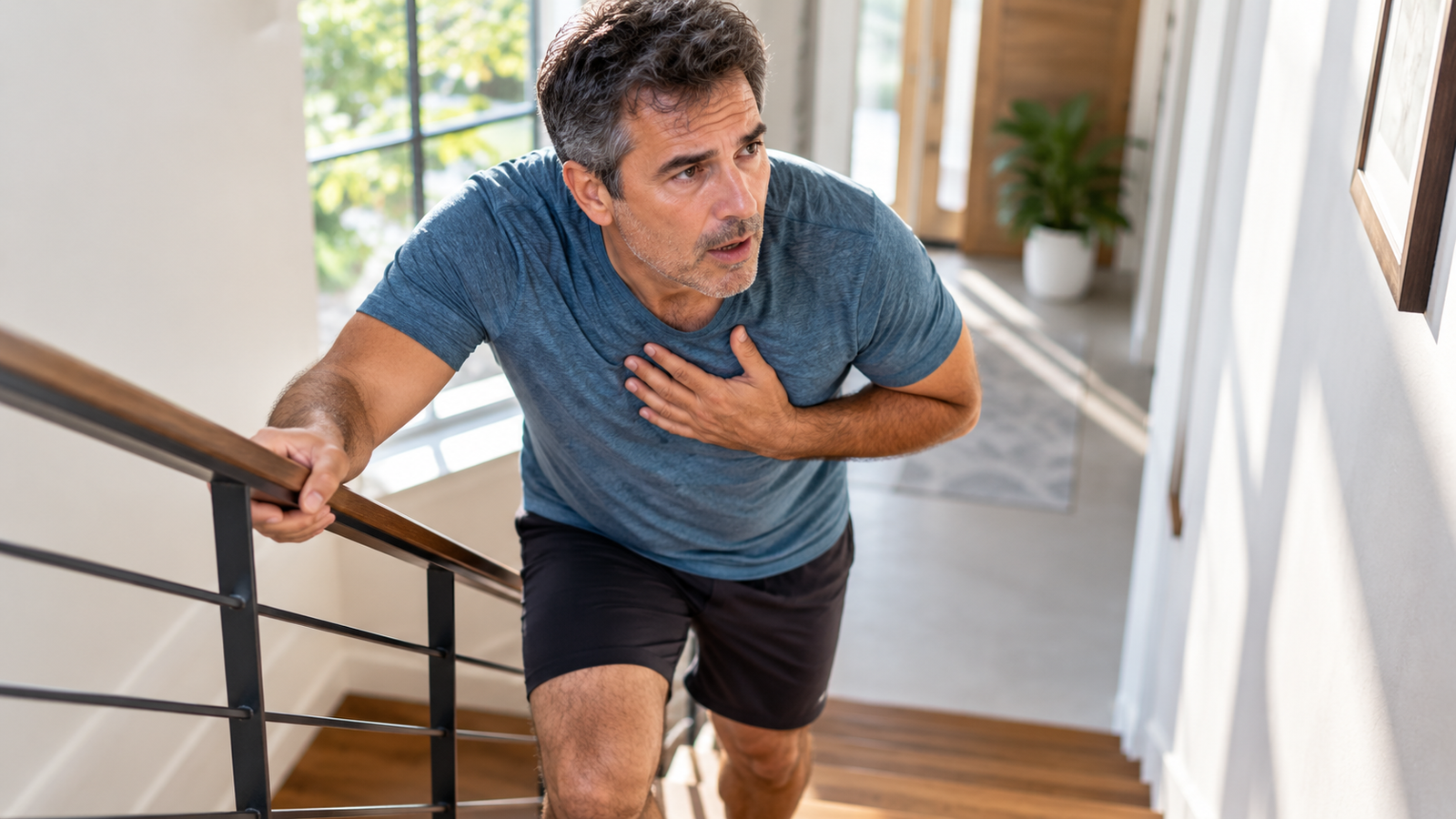
You climb one flight of stairs and suddenly find yourself breathing much harder than expected. Maybe you need to stop at the top, your heart is racing, or you wonder why something that used to feel easy now feels exhausting.
Feeling slightly winded during strenuous activity can be normal. However, becoming unusually short of breath during everyday activities such as climbing stairs, walking across a parking lot, or carrying groceries can sometimes signal that something else is affecting your heart, lungs, blood, fitness, or overall health.
Quick answer: Shortness of breath when climbing stairs can happen because of low fitness, recent inactivity, excess body weight, asthma, anemia, respiratory illness, heart problems, lung conditions, anxiety, or several other causes. If the breathlessness is new, worsening, happening with minimal activity, or accompanied by chest pain, fainting, severe weakness, or difficulty breathing at rest, seek medical care promptly.
On this page
What it feels like · Is it normal? · 10 possible causes · How it is evaluated · When to get checked · When it is an emergency · FAQs
What Does Shortness of Breath Feel Like?
Healthcare professionals often use the term dyspnea to describe shortness of breath.
You might describe it as:
- Feeling unable to get enough air
- Needing to breathe much harder than usual
- Chest tightness
- Gasping after relatively little activity
- Having to stop to catch your breath
- Feeling that you cannot take a satisfying deep breath
According to MedlinePlus, breathlessness is subjective. One person may feel short of breath after mild exercise while another person with a significant lung condition may describe surprisingly few symptoms.
Is It Normal to Get Winded Going Upstairs?
Sometimes.
Climbing stairs requires more effort than walking on a flat surface. Your leg muscles need more oxygen, your heart pumps faster, and your breathing rate increases to meet the demand.
If you rarely exercise, rushing up several flights of stairs may naturally leave you breathing harder.
However, the important question is whether the breathlessness feels appropriate for the activity.
For example, it may deserve attention if:
- You suddenly become more breathless than you used to
- One flight of stairs now feels unusually difficult
- You need several minutes to recover
- You develop wheezing, chest discomfort, dizziness, or palpitations
- You become breathless during ordinary walking
- You feel short of breath while resting
1. You May Be Out of Shape or Less Active Than Before
One of the simplest explanations is physical deconditioning.
If you have become less active because of work, illness, injury, lifestyle changes, or a long period without regular exercise, your muscles and cardiovascular system may not handle exertion as efficiently as they once did.
As a result, activities such as climbing stairs may make your heart and breathing rate increase more quickly.
The Cleveland Clinic notes that limited physical activity can contribute to breathlessness during everyday activities.
However, do not automatically assume poor fitness is the cause if your symptoms are new or becoming worse.
2. Asthma Can Cause Breathlessness During Activity
Asthma causes inflammation and narrowing of the airways.
Some people experience symptoms mainly during or after exercise. This is often called exercise-induced bronchoconstriction.
Possible symptoms include:
- Shortness of breath
- Wheezing
- Coughing
- Chest tightness
- Difficulty keeping up during exercise
Cold air, pollen, poor air quality, respiratory infections, smoke, and other irritants can make exercise-related symptoms worse.
If climbing stairs regularly triggers wheezing or coughing, tell your healthcare provider.
3. Anemia Can Make Everyday Activity Feel Harder
Anemia occurs when your blood does not carry enough oxygen effectively.
Iron-deficiency anemia is one common type.
Because your muscles receive less oxygen, you may notice:
- Shortness of breath during activity
- Fatigue
- Weakness
- Dizziness
- Heart palpitations
- Reduced exercise tolerance
Blood tests can help determine whether anemia is contributing to your symptoms.
This is particularly worth discussing if breathlessness occurs together with persistent fatigue.
4. A Recent Respiratory Infection May Affect Your Breathing
After a cold, flu, COVID-19, bronchitis, pneumonia, or another respiratory illness, you may notice that physical activity feels harder than usual.
Inflammation, coughing, congestion, reduced activity during illness, or lingering airway sensitivity can all contribute.
Many people gradually improve as they recover.
However, contact a healthcare provider if breathing problems persist, worsen, or occur with fever, chest pain, low oxygen levels, coughing up blood, or other concerning symptoms.
5. Heart Problems Can Cause Shortness of Breath
Your heart and lungs work together to deliver oxygen throughout your body.
If the heart cannot pump blood efficiently, everyday activities may produce noticeable breathlessness.
Possible heart-related causes can include:
- Heart failure
- Abnormal heart rhythms
- Coronary artery disease
- Heart-valve problems
- Cardiomyopathy
Breathlessness deserves particular attention when it occurs with:
- Chest pain or pressure
- Palpitations
- Dizziness or fainting
- Swelling in the legs or ankles
- Difficulty breathing when lying flat
- Unusual fatigue
If you have also noticed swelling in your legs, mention both symptoms to your healthcare provider.
6. Lung Conditions Can Reduce Exercise Capacity
Shortness of breath can also result from conditions affecting the lungs or airways.
Examples include:
- Asthma
- Chronic obstructive pulmonary disease (COPD)
- Pneumonia
- Lung scarring
- Pulmonary hypertension
- Other chronic lung disorders
Symptoms may include coughing, wheezing, chest tightness, reduced exercise tolerance, or breathlessness during increasingly mild activity.
A healthcare provider may recommend lung-function testing or imaging depending on your symptoms and history.
7. Body Weight Can Affect How Hard Your Body Works
Carrying additional body weight can increase the amount of work required during physical activity.
Climbing stairs is particularly demanding because you are moving your body upward against gravity.
Excess weight can also occur alongside conditions that affect breathing, such as sleep apnea, diabetes, high blood pressure, or heart disease.
However, weight alone should not automatically be blamed for breathlessness.
If your exercise tolerance has changed noticeably, the underlying reason still deserves evaluation.
8. Anxiety Can Change the Way You Breathe
Stress and anxiety can trigger rapid, shallow breathing and create a sensation of not getting enough air.
You may also experience:
- Racing heartbeat
- Chest tightness
- Tingling
- Dizziness
- Feeling panicked
However, physical symptoms should not automatically be attributed to anxiety before other appropriate causes are considered.
Learn more about how stress can affect your body.
9. Smoking or Vaping Can Affect Breathing
Smoking damages the lungs and cardiovascular system and increases the risk of chronic lung disease and heart disease.
Vaping can also expose the lungs to irritants and other substances that may affect respiratory health.
If you smoke or vape and notice increasing breathlessness, coughing, wheezing, or reduced exercise tolerance, discuss this with your healthcare provider.
10. Some Medications or Medical Conditions Can Contribute
Breathlessness sometimes occurs in connection with other health problems or medications.
Possible contributors may include:
- Kidney disease
- Liver disease
- Thyroid disorders
- Sleep apnea
- Neuromuscular conditions
- Certain medications
This is why your provider may ask about your complete medical history rather than looking only at your lungs.
What If My Heart Races When I Climb Stairs?
Your heart rate normally rises during physical activity.
However, tell your provider if your heartbeat feels unusually fast, irregular, pounding, or accompanied by:
- Chest discomfort
- Dizziness
- Fainting
- Severe breathlessness
- Weakness
An electrocardiogram or other testing may be appropriate depending on your symptoms.
What If I Feel Breathless and Tired All the Time?
Breathlessness combined with persistent fatigue can occur with several conditions.
Possible causes include:
- Anemia
- Heart problems
- Lung disease
- Sleep disorders
- Thyroid problems
- Infections
- Low physical fitness
Because the possibilities are broad, persistent symptoms deserve a proper medical assessment.
What If I Get Short of Breath but My Oxygen Level Is Normal?
A normal oxygen reading does not automatically explain or rule out every cause of breathlessness.
For example, someone may have normal oxygen levels at rest but still become breathless because of anemia, heart rhythm problems, asthma, anxiety, physical deconditioning, or other conditions.
Pulse oximeters can provide useful information, but they should not replace medical evaluation when symptoms are persistent or concerning.
How Will a Healthcare Provider Evaluate Breathlessness?
Your provider may begin by asking:
- When the problem started
- Which activities trigger it
- Whether symptoms are getting worse
- How long recovery takes
- Whether you cough or wheeze
- Whether you experience chest pain or palpitations
- Whether your legs swell
- Whether you smoke or vape
- Which medications you take
They may also check your:
- Heart rate
- Blood pressure
- Oxygen level
- Heart sounds
- Lung sounds
Depending on the findings, additional evaluation may include:
- Blood tests
- A complete blood count to check for anemia
- Chest imaging
- Electrocardiogram
- Lung-function testing
- Heart testing
- Exercise testing
Can Improving Fitness Help?
If medical evaluation does not identify a condition that limits exercise, gradually increasing physical activity may improve stamina.
You might begin with:
- Regular walking
- Short periods of moderate exercise
- Strength training
- Gradually increasing stair climbing
Avoid suddenly starting intense exercise if you have significant breathlessness, heart symptoms, or an underlying medical condition without first discussing it with your healthcare provider.
When Should Shortness of Breath Be Checked?
Schedule a medical evaluation if breathlessness:
- Is new
- Is becoming more noticeable
- Occurs with less activity than before
- Interferes with normal daily activities
- Occurs alongside fatigue or weakness
- Happens repeatedly without a clear explanation
- Occurs while lying down or sleeping
- Is associated with swelling in your legs
MedlinePlus specifically advises contacting a healthcare provider when it becomes difficult to breathe during activities that previously did not cause a problem, such as climbing stairs.
When Is Shortness of Breath an Emergency?
Do not wait for a routine appointment when breathing difficulty is severe or sudden.
Call 911 or seek emergency care for symptoms such as:
- Severe or sudden shortness of breath
- Difficulty speaking because you cannot catch your breath
- Chest pain or significant chest pressure
- Fainting or loss of consciousness
- Confusion
- Bluish lips or face
- Coughing up blood
- Severe weakness
- Sudden neurological symptoms
Breathing difficulty can sometimes indicate a serious heart, lung, or circulation problem and should not be ignored.
Shortness of Breath Evaluation in Garland TX
Feeling slightly winded after strenuous exercise is not unusual. However, everyday activities should not suddenly become much harder without explanation.
If climbing stairs, walking, or completing routine activities now leaves you unusually short of breath, it is worth finding out why.
At Medicus Health Clinics, our primary care and internal medicine team can review your symptoms, medical history, medications, cardiovascular risk factors, and other possible contributors before recommending appropriate testing or follow-up.
Learn more about how primary care can help evaluate new or persistent symptoms.
Schedule an appointment: Book an appointment with Medicus Health Clinics in Garland, TX.
This article is intended for general educational purposes and does not replace personalized medical advice, diagnosis, or treatment. Call 911 for severe or potentially life-threatening breathing difficulty.
Frequently Asked Questions
Is it normal to be short of breath after climbing stairs?
Mild breathlessness can be normal after strenuous activity, particularly if you are not physically active. However, new, worsening, or disproportionate breathlessness deserves medical evaluation.
Can being out of shape cause shortness of breath?
Yes. Reduced fitness can make everyday physical activity feel more demanding. However, do not assume deconditioning is the cause if your symptoms have changed suddenly or are worsening.
Can anemia make me short of breath?
Yes. Anemia can reduce the amount of oxygen carried in the blood and may cause breathlessness, fatigue, weakness, dizziness, or a racing heartbeat.
Can anxiety cause shortness of breath?
Yes. Anxiety may cause rapid or shallow breathing and a sensation of not getting enough air. However, persistent or unexplained breathlessness should still be medically evaluated.
When should I worry about shortness of breath?
Seek emergency care for severe or sudden breathing difficulty, chest pain, fainting, confusion, bluish lips or face, coughing up blood, or other serious symptoms. Otherwise, schedule an evaluation if breathlessness is new, worsening, recurring, or interfering with normal activity.
Looking for primary care in Garland?
Medicus Health Clinics provides primary care and internal medicine for adults in Garland, Texas.

Medically reviewed by Dr. Samuel Eleanya, MD
Board-Certified Internal Medicine Physician at Medicus Health Clinics in Garland, TX, with over 17 years of experience. Meet our providers
This article is for general information and is not a substitute for medical advice.